Coordinate Systems#
Defining coordinate system is a crucial aspect when working with IMU data. The coordinate system definition of an internal gaitmap library [1].
- Hearing Aid Frame (HAF)
forms a right-handed coordinate system with axes called X, Y, Z
uses right-hand-rule around each axis for definition of positive direction of the Gyroscope
axis as defined by the sensor itself, depends on how sensor is located in hearing aid housing
can be different for different hearing aid firmware versions
- Ear Sensor Frame (ESF)
forms a right-handed coordinate system with axes called X, Y, Z
uses right-hand-rule around each axis for definition of positive direction of the Gyroscope
defines axes’ directions as up (Z), to the tip of the shoe (X), and to the left (Y)
- Foot Body Frame (FBF)
consists of the 3 axes ML (medial to lateral), PA (posterior to anterior), and SI (superior to inferior)
is not right handed and should not be used for any physical calculations
produces the same sensor signal independent of the ear (right/left) for the same anatomical movement (e.g. lateral acceleration = positive acceleration)
follows convention of directions from [2].
Ear Frame Overview#
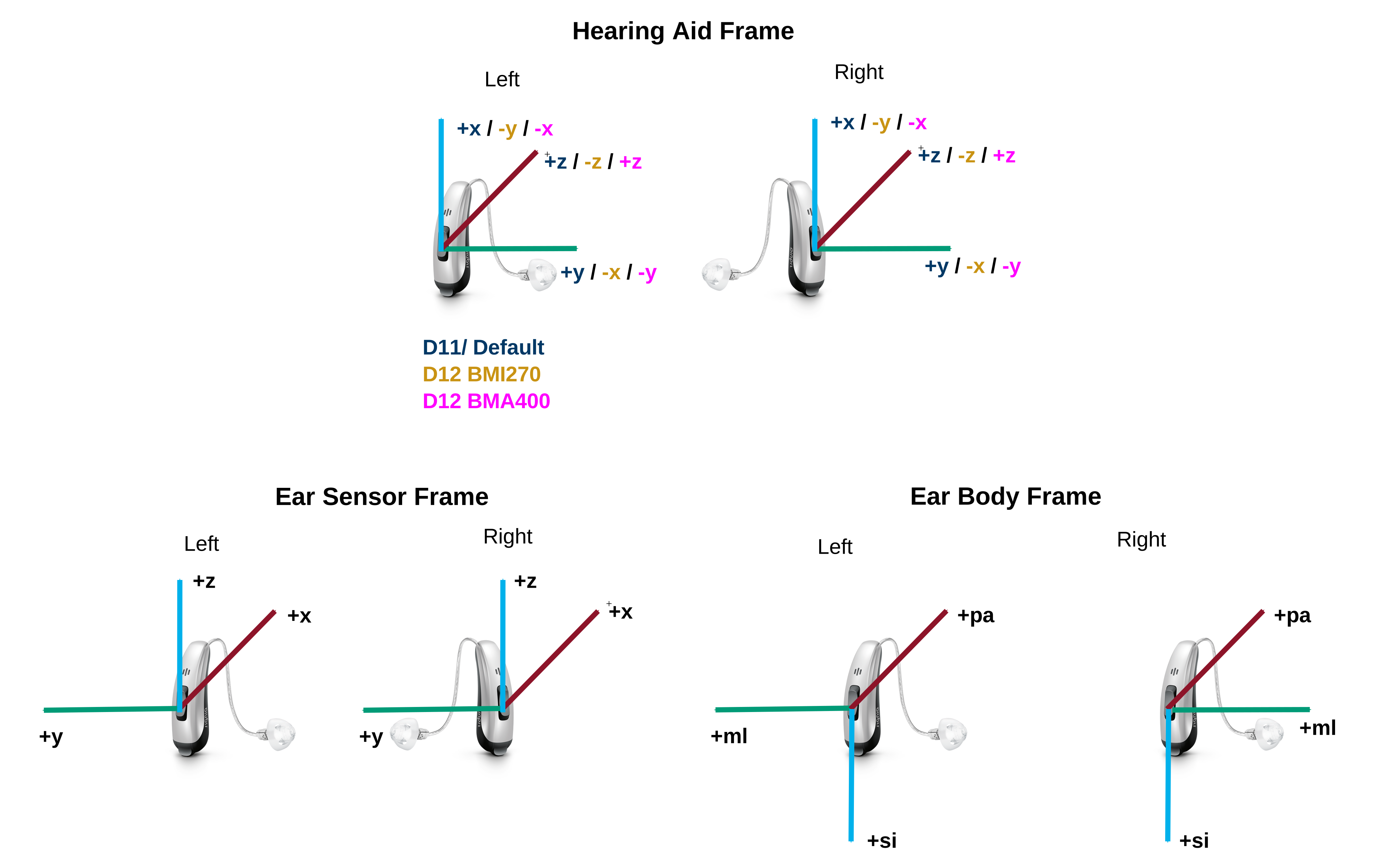
The positive directions for the accelerometer (straight arrows) and the gyroscope (circular arrows) for the hearing aid frame (top), ear sensor frame (bottom left) and ear body frame (bottom right). Click here for fullscreen version of image#

ESF |
EBF |
|||
|---|---|---|---|---|
Left Ear |
Right Ear |
Left Ear |
Right Ear |
|
Displacements |
||||
anterior |
+acc_x |
+acc_x |
+acc_pa |
+acc_pa |
posterior |
-acc_x |
-acc_x |
-acc_pa |
-acc_pa |
lateral |
+acc_y |
-acc_y |
+acc_ml |
+acc_ml |
medial |
-acc_y |
+acc_y |
-acc_ml |
-acc_ml |
inferior |
-acc_z |
-acc_z |
+acc_si |
+acc_si |
superior |
+acc_z |
+acc_z |
-acc_si |
-acc_si |
Algorithmic Implementation#
The algorithmic implementation is also based on the internal gaitmap library [2].
Alignment with the Ear Sensor Frame#
Aligning the coordinate system of a sensor with the eargait coordinate system can be a complicated, but usually requires prior knowledge about sensor orientation in the housing.
For Signa devices (D11, or D12) the function convert_ear_to_esf can be used to transform hearing aid sensor data into the ear sensor frame.
Note
For D12 a different rotation is required. For all other firmware versions a default ration will be applied.
Transformation into the Foot Body Frame#
Once the data is properly aligned to the earmap-ESF, it is very easy to transform it into the respective BF.
For this you can use the function convert_ear_to_ebf.
Transformation into the Foot Body Frame and Alignment to Gravity#
Some times an alignment with gravity is necessary.
The function aling_gravity_and_convert_ear_to_ebf transforms data into eargait-ESF, then alignes data with gravity and then transforms it into body frame.
Note
Can only be applied for if data is in eargait-HAF.